
Reviewed by:
Our Dermatology Editorial Team
Last Updated:
June 2026

As a dermatology-focused review team, we hear the same frustration from patients every week. They've tried creams labeled "firming." They've looked into radio frequency treatments and laser therapies.
They've watched viral videos promising tighter, lifted skin in seven days.
And most of them are understandably skeptical — because most of the time, those promises don't deliver.
The question isn't, "Does this look good in a marketing video?" It's, "Does it actually make sense from a scientific standpoint, and is there real clinical evidence that it delivers lasting results?"
In this guide, we break down what actually causes skin to lose firmness over time, which technologies have the science to address it, and what to look for if you're considering an at-home option.

Skin firmness is primarily structural. It depends on the integrity of collagen and elastin fibres in the dermis — the deeper layer of skin beneath the surface.
As we age, collagen production slows, existing fibres break down faster, and the dermal scaffolding that keeps skin taut gradually weakens.
This is why the vast majority of "skin tightening" products on the market can't deliver what they promise. When we evaluate them, most fail on the same clinical grounds:
They work only at the surface level
No topical product — no matter the price — can reach the dermal layer where collagen and elastin live. Firmness is a structural issue, and structure can't be changed with a cream.
They rely on temporary hydration effects
Many "firming" products plump the skin with moisture, creating a short-lived appearance of tightness. Within hours, the effect fades — because nothing structural has changed.
Most devices lack peer-reviewed evidence
For most at-home devices, the clinical evidence is either absent or brand-commissioned. We hold a high bar: we want independent, peer-reviewed data supporting a genuine mechanism of action.
To visibly improve skin firmness, you need a treatment that can reach the dermis — and that you can apply consistently enough for the effects to accumulate over time.

LED (light-emitting diode) therapy works through a process called photobiomodulation — the absorption of specific wavelengths of light by skin cells, triggering biological responses at a cellular level.
Unlike topicals, light energy can penetrate below the epidermis into the dermis, where collagen and elastin are found.
The key wavelengths relevant to skin tightening and firming are:
Together, these wavelengths create a complementary approach — addressing both the structural causes of firmness loss and the visible surface changes that come with it.
This is the basis of what makes LED therapy, specifically, a clinically coherent approach to at-home skin tightening.
"There is an overwhelming amount of data on red light therapy. Unlike most at-home skin tightening claims, the mechanism of action here is well-established — and the evidence for visible improvement in skin texture and firmness is genuinely compelling."
— Board-Certified Dermatologist
Dermatology Editorial Review Team
Not all LED devices are created equal. When evaluating whether an at-home LED device is worth considering for skin firming, we look for four non-negotiables:
After applying this framework across the at-home LED devices currently available, one stood out as the clearest fit across all four criteria.
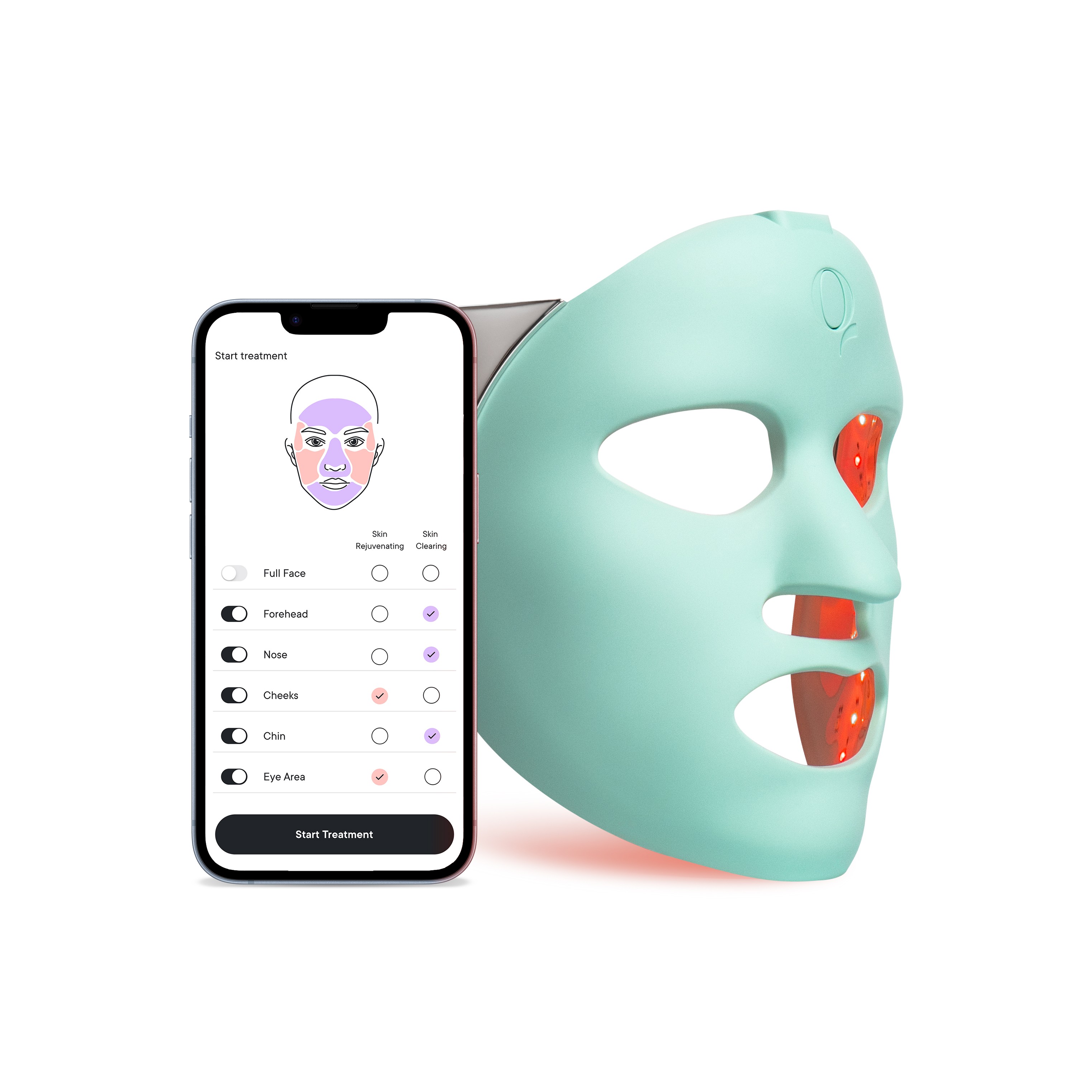
The Q-Rejuvalight Pro is the device that, in our assessment, most closely aligns with the clinical criteria above. It's the world's first customizable, FDA-cleared at-home LED device designed specifically for the treatment of wrinkles — and it's the one we'd point someone toward if they asked us which at-home LED mask is worth the investment.
Limited-Time Offer
Here's how it maps to the criteria we outlined:
Correct wavelengths for collagen support
Regulatory clearance
Consistent, daily-use design
Independent clinical validation
Customizable to individual needs
Red (630nm), Deep Red (660nm), Infrared (880nm), Amber (605nm), Blue (415nm) — 5 clinically studied wavelengths
FDA-Cleared for wrinkle treatment (K230042), plus CE, TGA, UKCA certified
3-minute wireless sessions, hands-free, no ongoing cost
Recommended by 50+ board-certified dermatologists
5 facial zones, 2 treatment modes, personalized via the Qure app
What sets it apart beyond the spec sheet is the combination of FDA clearance and the customizable, app-driven approach. Most LED masks offer one fixed treatment mode for the entire face.
The Q-Rejuvalight Pro lets you target specific facial zones with the wavelengths most relevant to each area's concerns — something that simply doesn't exist at this price point elsewhere.
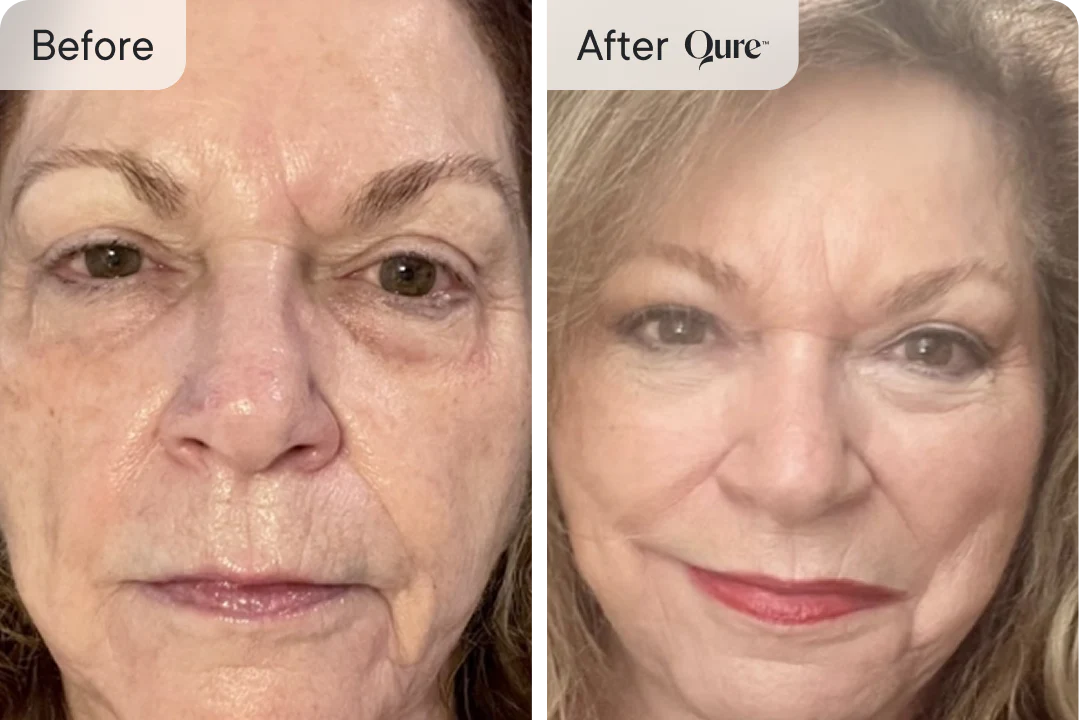
"After six weeks the changes in my skin were dramatic. I have now been using Qure six months and loving the compliments! I wish this technology had been available when I was younger."
— Terri P., 58
Verified Customer
The most important thing to understand about LED therapy for skin tightening is that results are cumulative, not immediate.
They build with consistent use — which is also what makes the at-home format so well-suited to this kind of treatment. Here's what to expect:
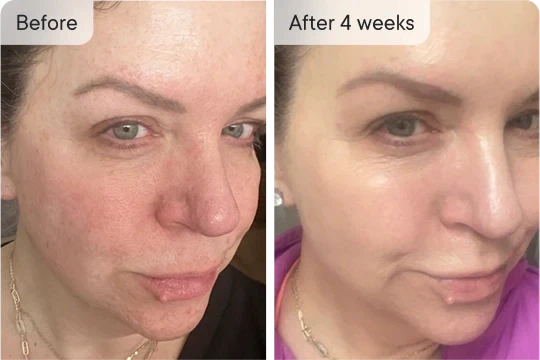
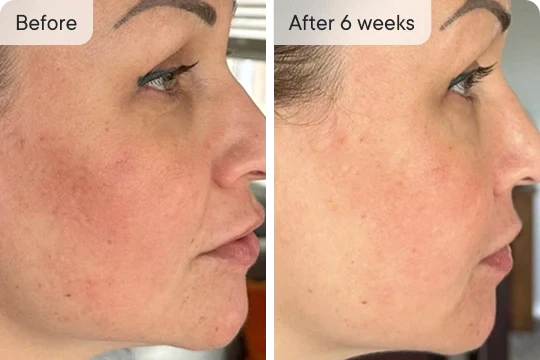
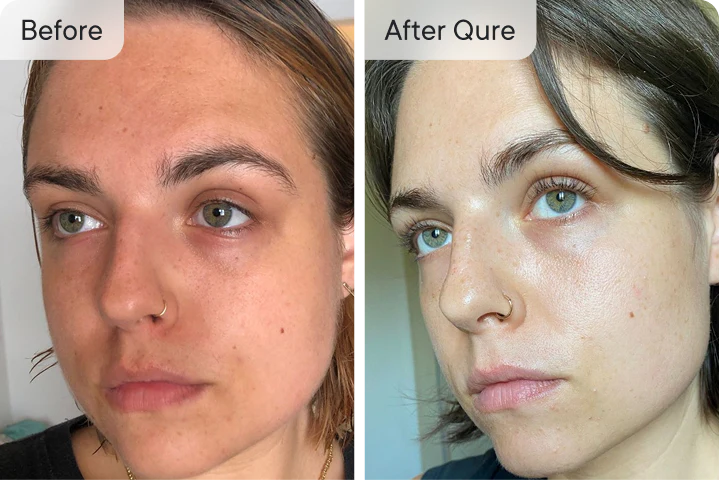
Before & After: Real Qure Users
30-Day Money-Back Guarantee
Based on our clinical experience, LED skin tightening therapy is most impactful for visible collagen loss, surface firmness changes, and fine lines — concerns that are too deep for topicals and don't yet require surgical intervention
A Considered Recommendation, Supported by Clinical Evidence
If our clinical perspective resonates with you, we believe the Q-Rejuvalight Pro is the most intelligent choice currently available for at-home skin tightening. It is the only at-home LED device we've reviewed that we can confidently endorse — and the only one our patients consistently report visible results from.
At $399, it represents a one-time investment that replaces the ongoing cost of clinic treatments. It pays for itself after just one or two professional LED sessions.
Your skin is worth the investment. Make it once.
