
Reviewed by:
Our Dermatology Editorial Team
Last Updated:
July 2026

"Is there actually something that treats adult acne at a clinical level — without antibiotics, prescriptions, or an ongoing cycle of trial and error?"
As a dermatology-focused editorial team, adult acne is one of the concerns we're asked about most. It's also one of the most misunderstood — because the skincare industry has conditioned people to think of acne as a product problem, when it's actually a biology problem.
Most over-the-counter acne treatments target the surface: they dry out the skin, reduce sebum temporarily, or exfoliate the top layer. But active inflammatory acne — the kind that's red, persistent, and keeps coming back in the same spots — has a bacterial and inflammatory origin that requires a different kind of intervention.
The question we ask isn't "which cleanser or spot treatment is strongest?"
It's: "What actually reaches the biological cause of the breakout — and can it be done consistently, safely, at home?"
In this guide, we break down the real science behind acne formation, which technologies have clinical evidence to address it, and what to look for if you're exploring at-home options.
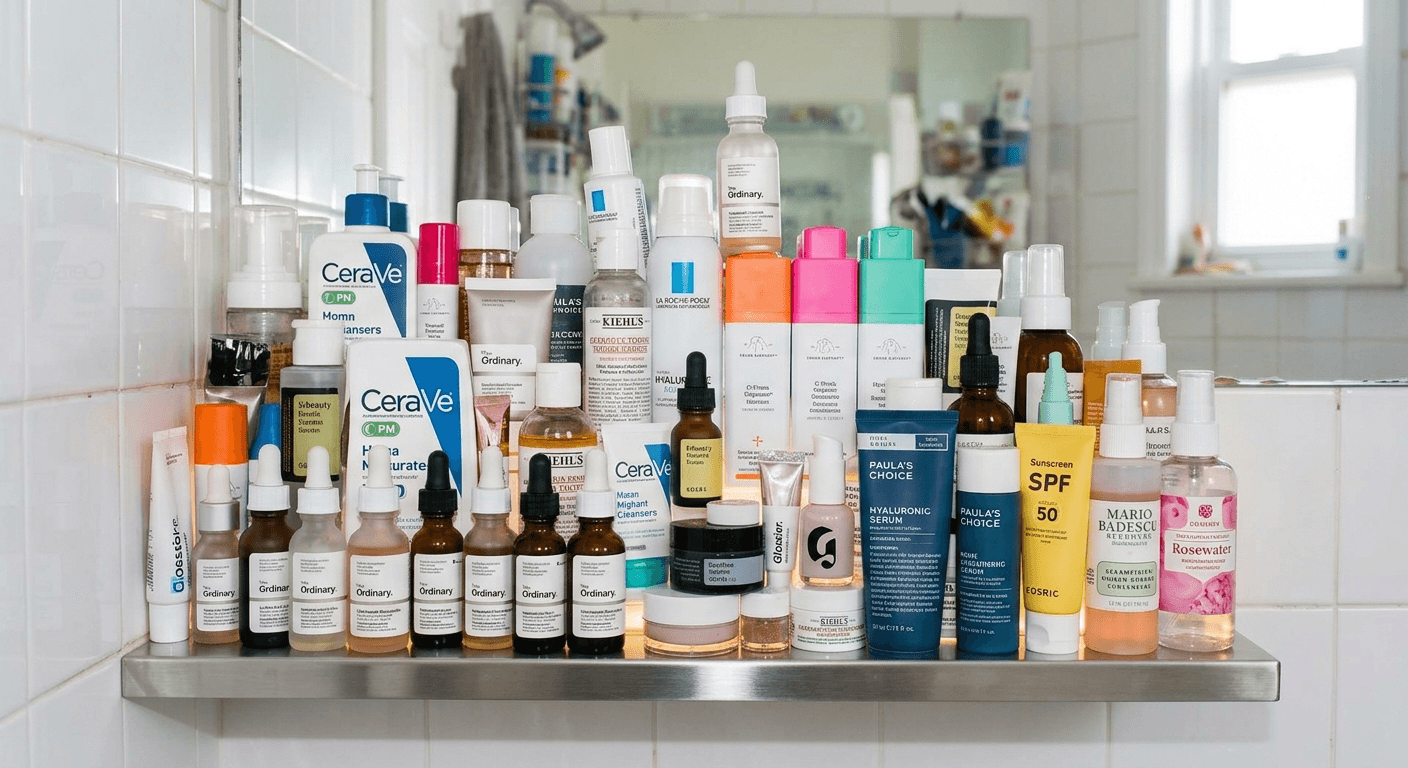
The acne treatment market is enormous. And yet, persistent adult acne remains one of the most common dermatological complaints we see.
The reason most treatments underdeliver comes down to where — and how — they work:
They address sebum and dead skin cells, not bacteria
Topical antibiotics build resistance
They don't address the inflammatory component
Side effects limit consistent use
Clearing acne consistently requires something that can reach the bacterial and inflammatory causes simultaneously — without the resistance or side-effect profile of topical antibiotics. That's the gap LED therapy fills.

LED therapy works through a process called photobiomodulation — the absorption of specific light wavelengths by biological targets in the skin, triggering measurable clinical responses.
For acne, the science is unusually well-established, because the bacterial target is known and the mechanism is direct.
Why Wavelength Combinations Matter?
Blue Light · 415nm
At 415nm, blue light is absorbed by porphyrins — compounds naturally produced by Cutibacterium acnes bacteria. This absorption generates reactive oxygen species that destroy the bacteria from within. It's a direct, targeted mechanism that doesn't create resistance because it's photochemical, not antibiotic.
Blue light alone is powerful. But the most effective approach combines it with the wavelengths that address the secondary driver of active acne: inflammation.
Red · 630nm
The Anti-inflammatory Wavelength
Reduces the redness, swelling, and discomfort of active breakouts. Supports skin recovery from existing lesions and helps fade post-acne marks over time.
The combination of blue light (antibacterial) and red light (anti-inflammatory) is the clinically validated dual-action approach most commonly used in professional dermatology clinics for acne treatment.
The at-home question is whether you can replicate the effect with a device that's accessible enough to use daily.

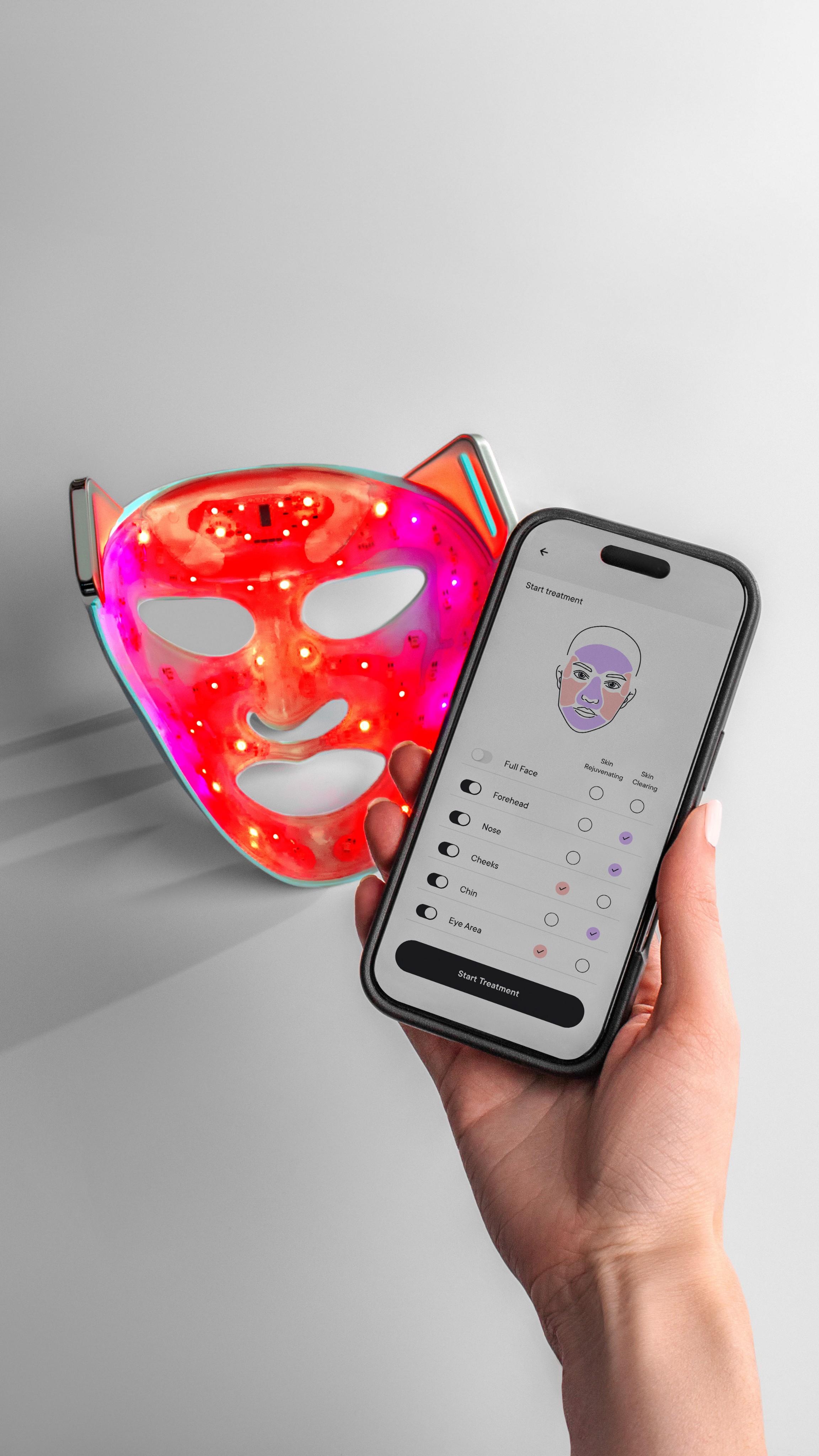
At-home LED devices for acne vary enormously in quality. Some deliver genuine clinical wavelengths; many don't. When we evaluate whether a device is worth recommending for acne treatment, we apply four criteria:
After applying these criteria to the at-home LED devices currently on the market, one stood out as the clearest fit — the only one that meets all four, including FDA clearance specifically for acne treatment.
Our Editorial Pick:
The Q-Rejuvalight Pro by Qure Skincare
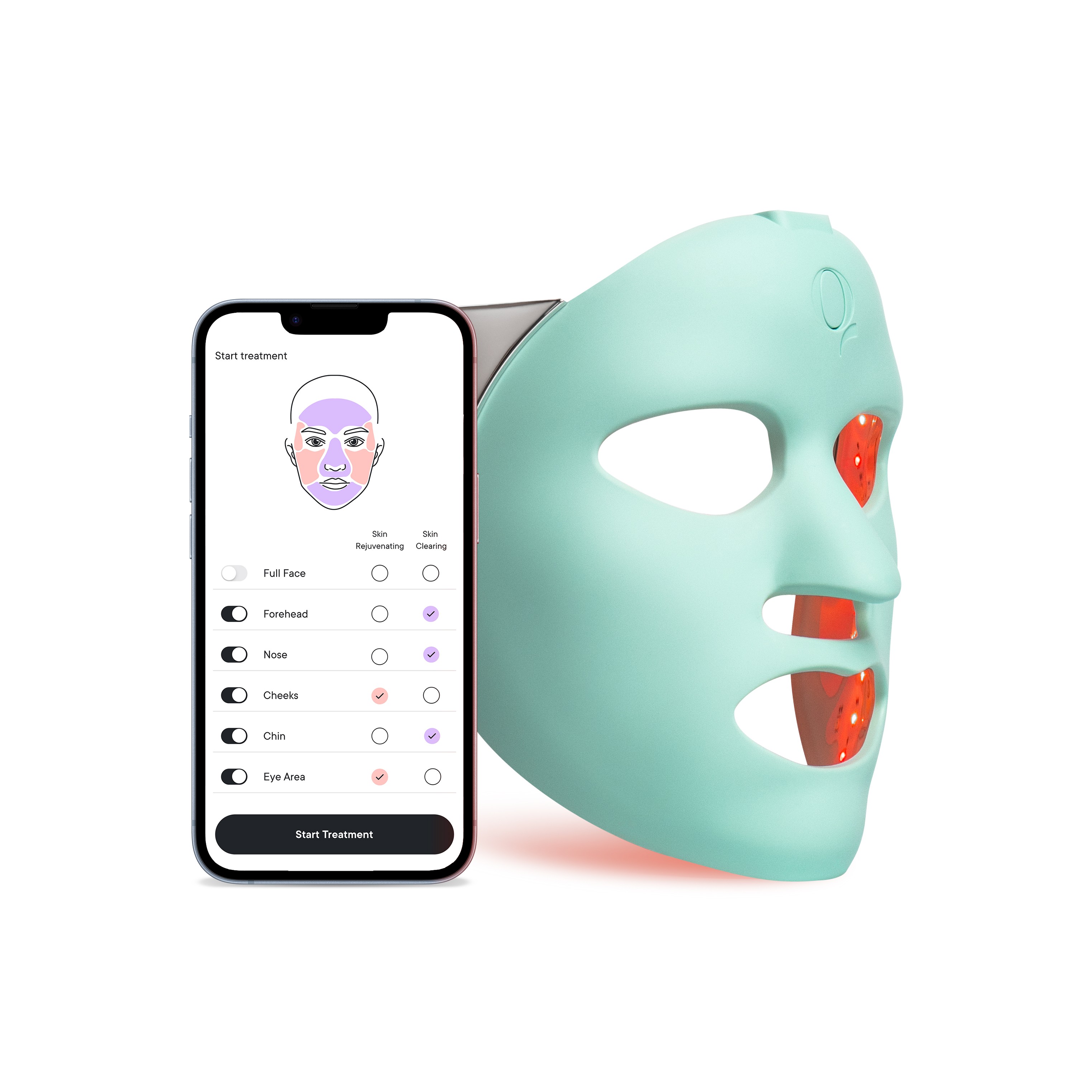
The Q-Rejuvalight Pro is the device that, in our assessment, maps most closely to the clinical criteria above. It's an FDA-cleared at-home LED face mask — and notably, one of the few at-home devices to carry FDA clearance specifically for mild-to-moderate inflammatory acne treatment (clearance K230042), in addition to wrinkle treatment.
That dual clearance is unusual and meaningful: it signals that the device has been independently evaluated for two distinct clinical indications, both backed by submitted clinical evidence.
Limited-Time Offer
Correct acne-clearing blue wavelength
FDA clearance for acne
Anti-inflammatory complement
Daily-use design
Zone-specific customization
Blue light at 415nm — the peak porphyrin absorption wavelength for C. acnes
FDA-Cleared K230042 for mild-to-moderate inflammatory acne (+ wrinkle treatment)
Red (630nm), Deep Red (660nm), Infrared (880nm) — all 5 wavelengths included
3-minute wireless sessions, hands-free, no ongoing consumable cost
5 facial zones assignable via the Qure app — target acne-prone areas precisely
The zone-customization feature is particularly relevant for acne. People tend to break out in specific, recurring areas — the chin, the jaw, the T-zone.
The Q-Rejuvalight Pro lets you direct the blue light precisely where you need it, rather than applying a fixed treatment uniformly across the face.

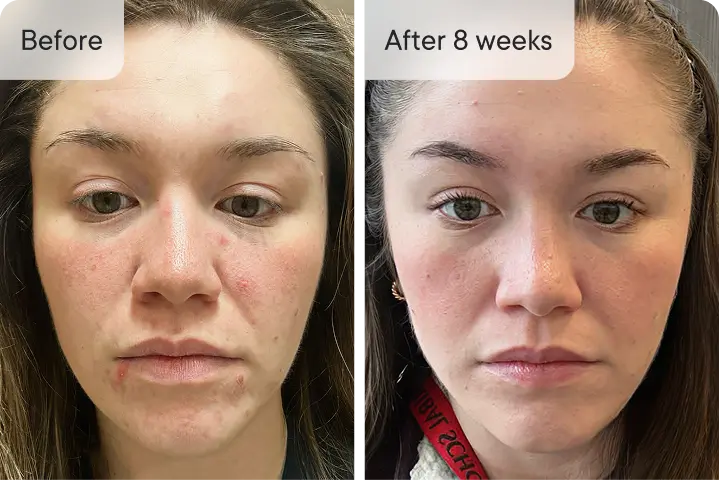
"No breakouts for 8 weeks. Even I was shocked. My friends had been commenting on how good my skin looked, and now I see what they meant."
— Michelle S., 44
Verified Customer
LED therapy for acne works cumulatively. Unlike a spot treatment that dries out an existing breakout overnight, blue LED works by reducing the bacterial population over time and calming the inflammatory response — which means results build with consistent use.
Here's what the clinical timeline typically looks like:
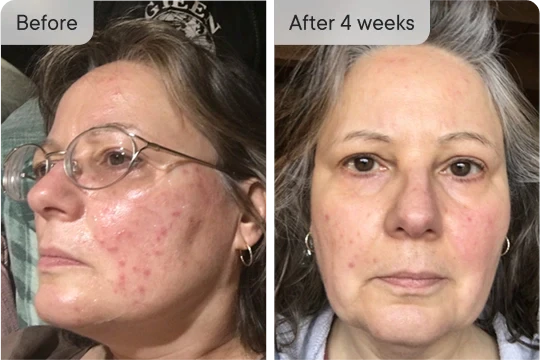
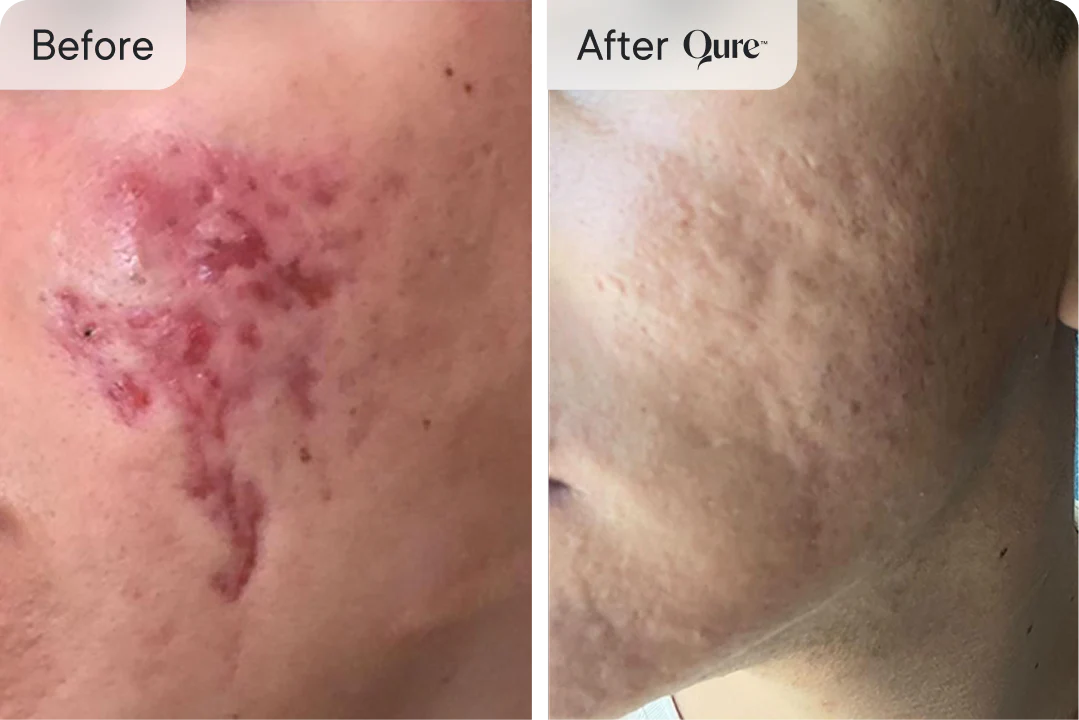
Before & After: Real Qure Users
30-Day Money-Back Guarantee · Free US Shipping
Based on our clinical assessment, blue LED therapy is most suited to mild-to-moderate inflammatory acne — the kind that's persistent, recurring, and hasn't fully responded to topical treatments alone. It's not a replacement for clinical care in severe cases, but it is a clinically credible option for the vast majority of adults dealing with breakouts.
A Considered Recommendation, Backed by Clinical Evidence
If our clinical perspective resonates with you, the Q-Rejuvalight Pro is the at-home LED device we'd point you toward.
It carries FDA clearance for the exact indication we're discussing — mild-to-moderate inflammatory acne — and combines the blue light antibacterial mechanism with the anti-inflammatory red and infrared wavelengths that address the complete picture of breakouts.
It's a one-time investment that replaces the recurring cost of prescription topicals, clinic LED sessions, and the cycle of products that treat the symptom rather than the cause.
