

Written by:
Sarah M., 44
Published October 2026

The Science, Briefly
Red light (around 630–660nm) and near-infrared light (around 830nm) penetrate the skin at different depths. At the cellular level, they stimulate mitochondria — essentially your skin cells' energy source — triggering a cascade that increases collagen and elastin production. Unlike laser treatments, LED is non-thermal, meaning no damage, no downtime, no recovery. You just sit with it on your face for 10–20 minutes. That's it.
Getting used to it (and feeling slightly ridiculous)
The mask is wireless — no cords, no being tethered to an outlet. You connect it to an app, pick your treatment mode (customizable based on what your skin needs), and it runs for just 3 minutes. The only rule: skin has to be clean and makeup-free beforehand, which I folded into my evening routine easily. I won't lie, the first few sessions felt a little strange — you're sitting there glowing red-orange light at yourself. But it's completely painless, warm, almost meditative. No skin changes yet, but I wasn't expecting any this early.
Something shifts — but I'm not sure what
By the end of week two, my skin felt different before I could see a difference. Softer, somehow. More hydrated-looking, even without changing anything else in my routine. The lines were still there, but my overall complexion looked less dull. My husband, unprompted, said I looked "less tired." He has no idea I'm doing this experiment, so I'll take that as unbiased data.
The lines around my eyes — visibly softer
This is when I started photographing my face daily, mostly because I wanted to make sure I wasn't imagining things. The crow's feet that had been bothering me most looked less pronounced — not gone, let's be realistic, but softer. Smoother. The lines between my brows had relaxed a little. My skin texture, which had always been slightly uneven on my cheeks, looked more refined overall. I also noticed my complexion seemed more even — less of that general dullness I'd gotten used to. Small things, but they were adding up.
People started asking what I was doing differently
Three separate people asked about my skin in week four. One colleague, one neighbor, and my mother — who is not a woman who gives compliments easily. My skin looked plumper, more even, and genuinely more youthful. The fine lines hadn't disappeared, but they looked like they belonged to someone a few years younger than I felt in January. That's the best way I can describe it.
Here's the thing I didn't anticipate. I'd focused entirely on my face going into this. But when I ordered the mask, Qure was running a bundle offer — you get the Q-Rejuvalight Pro LED Mask, and they include their Neck & Décolletage LED System free.
Worth $299. Just included.

The included Neck & Décolletage LED System — the part of the routine most people skip entirely.
I almost didn't use the neck device at first. But halfway through week two, I started using it in tandem.
Within two weeks, the difference in my neck was more dramatic than anything I'd seen on my face — because my neck had received exactly zero targeted skincare attention in my life up to this point. The texture smoothed. The skin felt firmer. The horizontal lines at the base of my neck looked less pronounced.
If I'm being honest, the neck device alone is worth the price of the whole bundle. The fact that it came free still doesn't quite compute.
30
The Exact Mask I Used
Q-Rejuvalight Pro LED Mask
No filters, no professional lighting — just 3 minutes a night for 30 days. Below is the exact device (plus the free bundle piece) that got me here.
The Exact Bundle Sarah Used
Face mask + free neck device — while the Birthday Sale runs
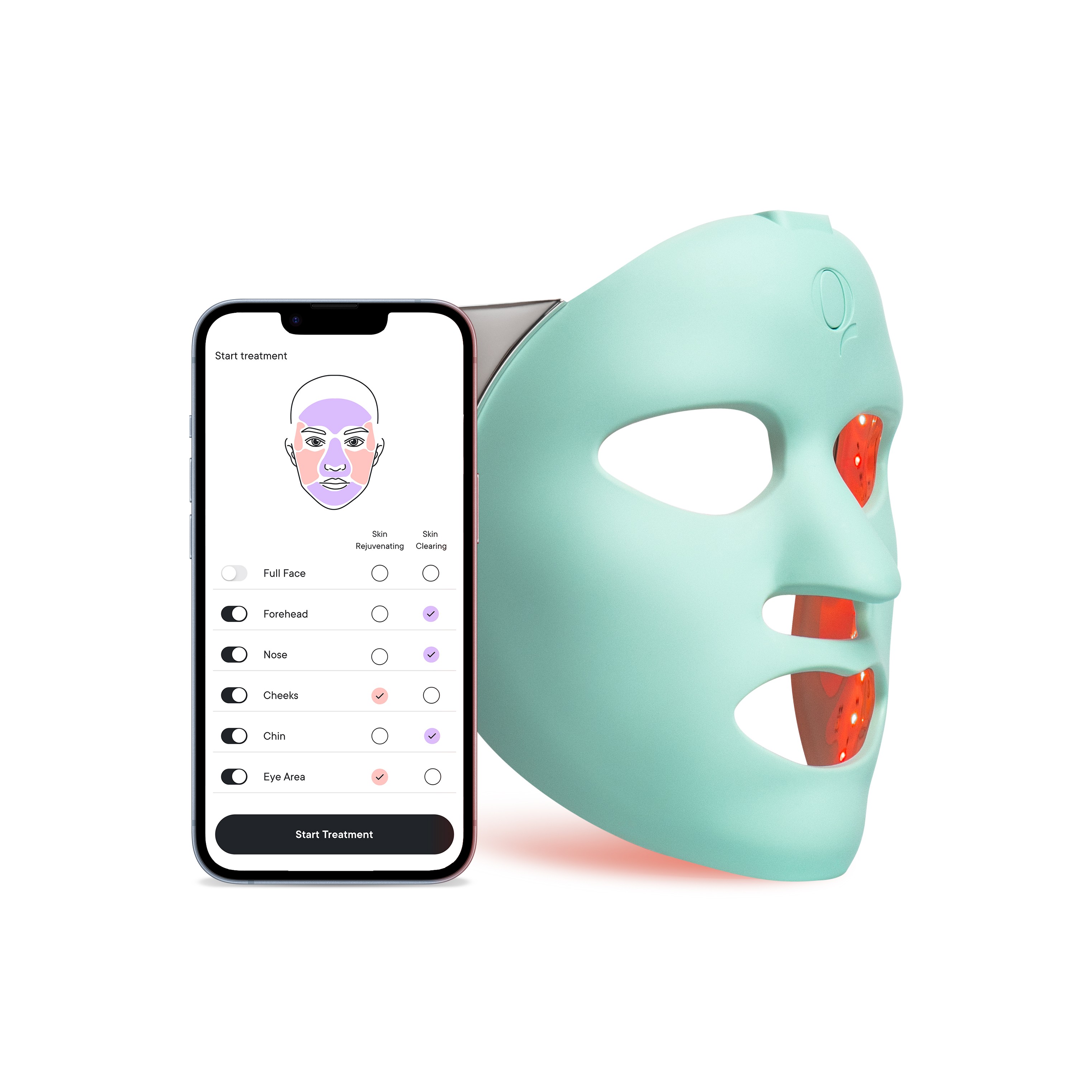
Wireless, app-controlled

$399
FDA-Cleared
Dermatologist Reviewed
30-Day Guarantee
Free shipping

"LED light therapy is one of the most exciting advances in at-home skincare. When done right — with the correct wavelengths and treatment time — the results rival what I see in my clinic. The Q-Rejuvalight Pro does it right."
- Dr. Anthony Youn, Board-Certified Plastic Surgeon, America's Holistic Plastic Surgeon®
Is It Worth It? My Honest Take.
The Q-Rejuvalight Pro retails at $399. A single in-office LED treatment where I live runs $150–200, with practitioners recommending a course of 6–10 sessions. That's up to $2,000 for a single course — and then you maintain with monthly appointments. The math here isn't complicated.
What surprised me wasn't that it worked — the science had already told me it would. What surprised me was how much I looked forward to using it. Ten minutes, sitting quietly, in the dark if I wanted. There's something almost luxurious about it. It became the thing I did for myself at the end of the day, and my skin shows it.

The free neck device takes it from "good deal" to "genuinely exceptional value." I haven't seen another brand bundle full-body LED coverage at this price point. The neck is where we all show our age first, and it's the area that almost every other skincare routine ignores completely.
If you're 35 or older and you've been doing the serum dance without seeing the results you want, LED is the logical next step. The technology is real. The results are real. And right now, the price for both devices together is better than anything else I found.
What Others Are Saying
Our Verdict: Top 5 At-Home LED Devices
#1
Q-Rejuvalight Pro by Qure Skincare
FDA-cleared · 5 wavelengths · app-customizable · free neck device bundle
9.7/10
$399
#2
Strong results, $455, no neck coverage, sold separately
8.6/10
#3
Well-reviewed dual-wavelength mask, $470, neck device sold separately
8.3/10
#4
FDA-cleared and clinically solid, but $395 gets you the face mask only
7.9/10
#5
Budget pick — inconsistent wavelength accuracy, no clinical backing found
6.4/10

The free Neck & Décolletage LED System is included while the birthday bundle runs.
Once it ends, both devices sell separately.
$399
FDA-Cleared
Dermatologist Reviewed
30-Day Guarantee
Free shipping